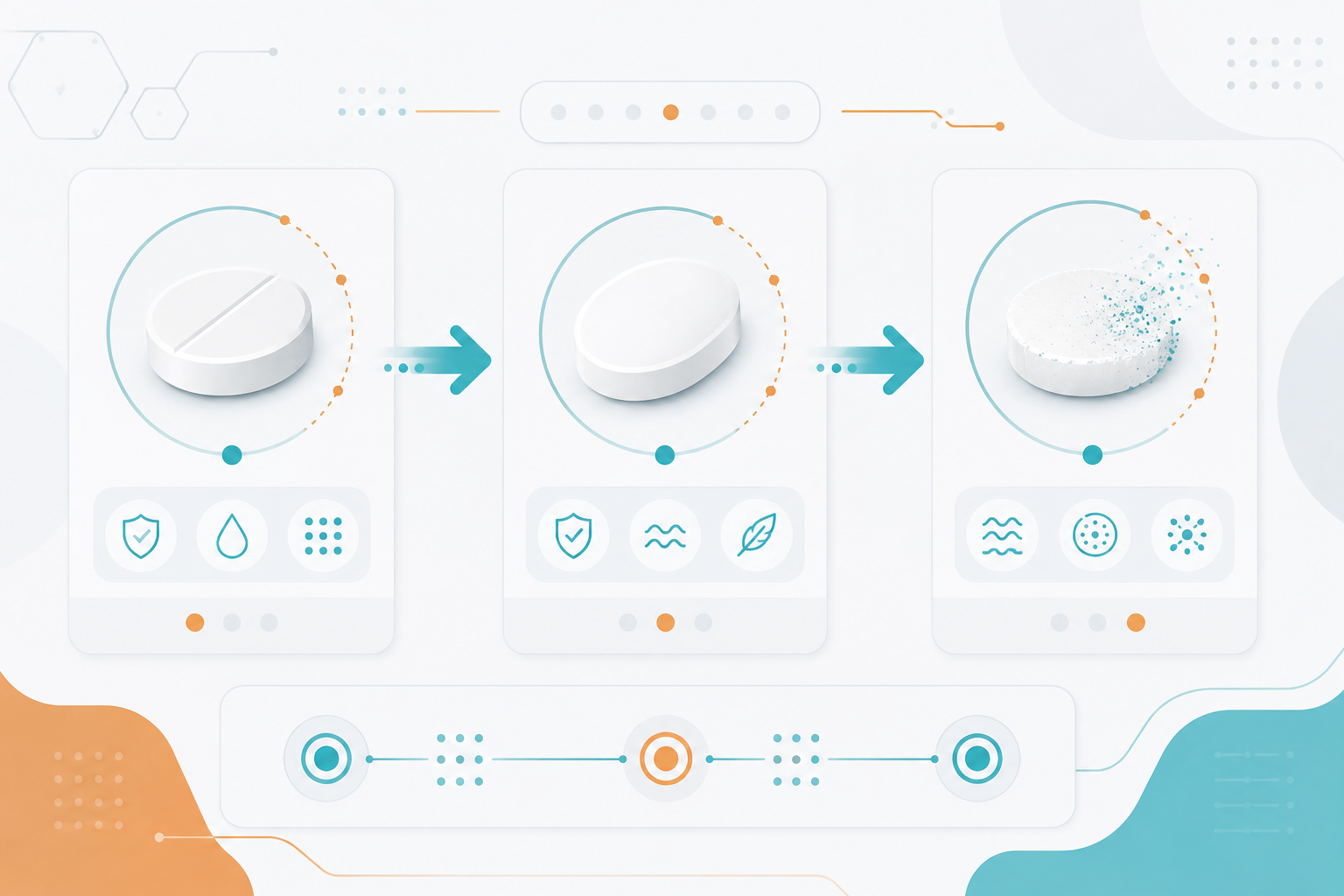
Switching forms is one of the most effective ways to improve vardenafil performance. Tablets, soft tabs, and ODT differ in how they dissolve, absorb, respond to food, and deliver onset speed — making form selection a critical factor for users experiencing weak, inconsistent, or completely absent effects. When tablets underperform, transitioning to soft tabs or ODT often restores strength, stability, and predictable onset, especially in food‑sensitive or low‑response profiles.
This page explains when switching forms truly helps, which form fits each user type, and how to choose the optimal option for fast onset, stable effect, minimal food sensitivity, or resolving nonresponse. Practical guidance is integrated with natural navigation to related diagnostic sections, including Soft Tabs vs Tablets, ODT Optimization, Weak Effect, Not Working, and Nonresponders.
Switching vardenafil forms is one of the most reliable strategies for improving effect strength, onset consistency, and overall treatment stability. Each formulation — tablets, soft tabs, and ODT — behaves differently in terms of dissolution, absorption, and interaction with food, which directly shapes bioavailability and onset speed. Users who experience weak or inconsistent results with standard tablets often regain predictable performance by transitioning to soft tabs or ODT, both of which bypass several limitations of traditional oral dosing.
Bioavailability varies significantly across forms: tablets deliver medium systemic exposure, soft tabs provide higher absorption due to sublingual dissolution, and ODT achieves very high uptake through rapid mucosal absorption. These differences explain why switching forms is a core troubleshooting tool for resolving weak effect, not working scenarios, and even borderline nonresponder profiles. Food sensitivity also shifts across forms — tablets are highly affected by meals, soft tabs moderately, and ODT minimally — making form selection essential for users who frequently take doses after eating.
Onset speed further separates the formulations: tablets activate at a standard pace, soft tabs accelerate onset through faster dissolution, and ODT provides the quickest response due to immediate mucosal absorption. These pharmacokinetic differences mean that each form fits a distinct user type. Fast‑onset seekers typically benefit from ODT, stability‑focused users often prefer soft tabs, and tablet users may require switching when food sensitivity or inconsistent absorption limits effectiveness. Understanding these distinctions allows users to choose the form that aligns with their goals and eliminates performance issues through targeted optimization.
| Form | Bioavailability | Food Sensitivity | Onset Speed |
|---|---|---|---|
| Tablets | Medium | High | Standard |
| Soft Tabs | High | Medium | Fast |
| ODT | Very high | Low | Very fast |
Standard vardenafil tablets are the most food‑sensitive and timing‑dependent formulation, which makes them the least stable option for users who need predictable onset and consistent effect strength. Their absorption relies heavily on gastric conditions, meaning any variation — a recent meal, high‑fat food, delayed gastric emptying — can significantly reduce bioavailability. This is why many users experience weak or inconsistent results, especially when dosing is not perfectly timed. In these cases, switching to soft tabs or ODT becomes a practical and often necessary optimization step.
Weak effect is the most common tablet‑related issue. Because tablets have high food sensitivity, even small dietary deviations can reduce absorption enough to produce suboptimal results. Users who frequently take doses after meals or have naturally slower gastric motility often benefit from soft tabs, which dissolve orally and bypass most food‑related variability. Inconsistent effect is another typical pattern: tablets may work well one day and poorly the next, usually due to timing mistakes or unpredictable food interactions. Soft tabs provide a more stable profile by reducing dependence on gastric absorption.
Complete lack of effect — “no effect at all” — often indicates absorption failure. In these cases, switching directly to ODT is recommended because ODT dissolves on the tongue and absorbs through the oral mucosa, delivering very high bioavailability even in users with GI sensitivity. For borderline nonresponders, tablets frequently underperform due to low systemic exposure; ODT provides the strongest and most reliable alternative. Overall, tablets should be replaced whenever food sensitivity, timing issues, or absorption limitations prevent stable therapeutic performance.
| Problem | Cause | Recommended Switch |
|---|---|---|
| Weak effect | Food sensitivity | Soft Tabs |
| Inconsistent effect | Timing + food | Soft Tabs |
| No effect | Absorption failure | ODT |
| Nonresponse | Low bioavailability | ODT |
Soft tabs are the preferred vardenafil form for users who need faster onset, higher stability, and reduced sensitivity to food. Unlike tablets, soft tabs dissolve orally, allowing partial absorption through the mucosa before reaching the GI tract. This mechanism produces a quicker and more reliable onset, making soft tabs ideal for users who struggle with slow activation or timing‑related inconsistencies. Their moderate food sensitivity also makes them a strong alternative for users who cannot reliably take vardenafil on an empty stomach.
Soft tabs are particularly effective for weak effect caused by slow onset. Many tablet users interpret delayed activation as “low strength,” when in reality the issue is slow dissolution and gastric dependency. Because soft tabs dissolve faster, they deliver earlier systemic exposure and noticeably stronger initial response. They also stabilize performance for users whose results vary depending on meal timing. With lower food sensitivity, soft tabs maintain more predictable absorption even when taken after light meals, reducing the day‑to‑day variability seen with tablets.
Soft tabs are also recommended for users with GI sensitivity or tablet intolerance. Some individuals experience discomfort, nausea, or reduced absorption due to gastric conditions; soft tabs bypass much of this by dissolving orally. For users comparing forms, the detailed breakdown in Soft Tabs vs Tablets highlights why soft tabs outperform tablets in stability, onset speed, and food resilience. Overall, soft tabs are the optimal choice for weak effect, inconsistent results, and any scenario where faster, more stable performance is required.
| Scenario | Problem | Why Soft Tabs Help |
|---|---|---|
| Weak effect | Slow onset | Faster dissolution |
| Inconsistent effect | Food variability | Lower food sensitivity |
| Tablet intolerance | GI sensitivity | Oral dissolution |
ODT is the strongest and most reliable vardenafil form, designed for users who need maximal bioavailability, minimal food sensitivity, and the fastest possible onset. Unlike tablets and soft tabs, ODT dissolves directly on the tongue and absorbs through the oral mucosa, bypassing the gastrointestinal tract and avoiding the absorption failures that often cause weak or absent effects. This makes ODT the preferred switch for users who consistently experience poor results with other forms, especially those who fall into borderline nonresponder profiles or report complete lack of onset.
Food sensitivity is one of the main reasons tablets and even soft tabs may underperform. High‑fat meals can delay gastric emptying and block absorption, leading to “not working” scenarios. ODT avoids this problem almost entirely: its low food sensitivity allows stable performance even when taken after light meals, making it the most forgiving option for users who cannot reliably dose on an empty stomach. For individuals who repeatedly encounter not working episodes due to food interference, switching to ODT is often the most effective corrective step.
ODT also excels in cases of very weak effect caused by low sensitivity or insufficient systemic exposure. Because ODT provides the highest bioavailability and fastest absorption, it delivers stronger initial activation and more consistent therapeutic levels. Users who feel that tablets or soft tabs “barely work” often experience a dramatic improvement after switching to ODT. Its rapid mucosal uptake makes it ideal for those who need fast onset, stable strength, and minimal variability. Overall, ODT is the best switch whenever absorption limitations, food sensitivity, or nonresponse prevent other forms from delivering reliable results.
| Scenario | Problem | Why ODT Helps |
|---|---|---|
| Nonresponders | No onset | Highest bioavailability |
| Not working | Food blocking | Low food sensitivity |
| Very weak effect | Low sensitivity | Fast absorption |