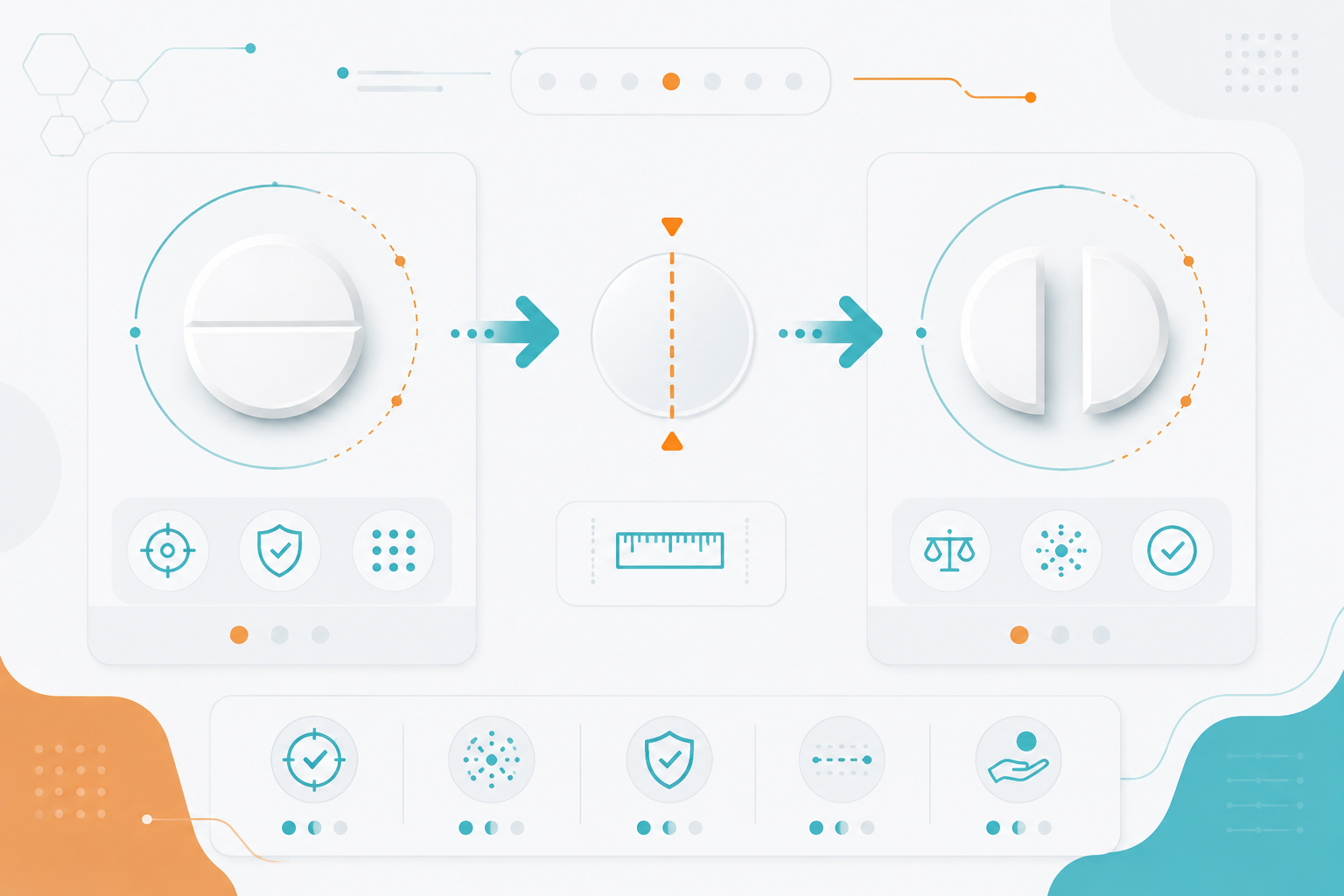
Splitting vardenafil tablets is a practical dose‑adjustment method for users who need finer control over onset, intensity, and overall stability of the effect. Halves often behave differently from full tablets: reduced mass changes dissolution speed, which may shift onset and alter peak strength. This makes splitting useful for sensitive users or those exploring micro‑adjustments beyond standard strengths, especially when optimizing dose stability through microdosing or troubleshooting inconsistent responses. For broader dose‑selection guidance, see the structured overview in Best Dose.
Splitting helps when the full dose feels too strong, when onset is too abrupt, or when users want gradual titration without committing to higher strengths. However, it may reduce stability for those who already experience fluctuating absorption or rely on precise timing. Users comparing different forms can review Soft Tabs vs Tablets and optimize ODT performance via ODT Optimization, ensuring the chosen form aligns with their sensitivity profile and preferred dosing strategy.
Splitting vardenafil tablets is a mechanical way to reduce or fine‑tune the dose, but the process changes more than just the milligram count. Once a tablet is cut, each half dissolves differently because the protective outer layer is disrupted and surface area increases. This often leads to faster dissolution, shifting onset and altering peak intensity compared with a full tablet. For users exploring microdosing strategies, this can be beneficial, allowing gentler titration and lower overall strength.
However, splitting also introduces instability. Active ingredient distribution inside vardenafil tablets is not perfectly uniform, meaning halves may contain slightly different amounts of the drug. This unevenness can produce inconsistent responses, especially in users already prone to fluctuating absorption or variable onset. Those troubleshooting unpredictable reactions can review Inconsistent Results to understand how splitting interacts with timing, food intake, and sensitivity profiles.
Splitting is justified when the standard dose feels too strong, when users want a softer onset, or when gradual dose reduction is needed. It is less suitable for individuals who require high stability, precise timing, or consistent effect strength. Understanding how mechanical division affects dissolution and distribution helps determine whether splitting supports or undermines the intended dosing strategy.
| Effect | Outcome | Stability | Best For |
|---|---|---|---|
| Reduced dose | Lower strength | Medium | Sensitive users |
| Uneven halves | Inconsistent effect | Low | Not recommended |
| Faster dissolution | Earlier onset | Medium | Microdosing |
Splitting vardenafil tablets is a practical way to reduce the dose without purchasing a lower‑strength product. A standard 10 mg tablet can be divided into roughly two 5 mg halves, offering a gentler effect for users who respond strongly to full doses. This approach is especially relevant for sensitive users who experience headaches, flushing, or overly rapid onset. By mechanically reducing the dose, splitting helps soften peak intensity and may decrease the likelihood of side effects while still maintaining functional efficacy. For broader dose‑selection principles, see Best Dose.
Splitting becomes advantageous when lower‑dose tablets are unavailable, overpriced, or when users want flexible titration rather than committing to a fixed strength. It also supports gradual dose reduction during dose escalation strategies, allowing users to test intermediate strengths (e.g., ~10 mg from a 20 mg tablet) before adjusting further. However, splitting is not ideal for individuals who require maximum stability, as uneven halves may produce inconsistent responses. Understanding when dose reduction via splitting aligns with personal sensitivity and effect goals is key to using this method effectively.
| Original Dose | Split Dose | Effect Strength | Best For |
|---|---|---|---|
| 10 mg | ~5 mg | Low | Sensitive users |
| 20 mg | ~10 mg | Moderate | Strong responders |
| 20 mg | ~5 mg | Low | Microdosing |
Split vardenafil tablets dissolve faster because cutting exposes the inner matrix and increases surface area. This accelerates absorption and often leads to earlier onset compared with intact tablets. However, faster dissolution does not guarantee stability. Vardenafil’s active ingredient is not distributed perfectly evenly inside the tablet, so halves may contain slightly different amounts of the drug. This unevenness can produce fluctuating strength, especially in users who already struggle with timing or absorption variability. Those troubleshooting timing issues can review Timing Mistakes.
Tablet type also matters. Uncoated tablets dissolve quickly and predictably, while coated tablets are engineered for controlled breakdown. Splitting coated tablets removes part of the protective layer, causing the halves to behave more like uncoated tablets — faster absorption but lower stability. Food intake further influences absorption: high‑fat meals slow onset and may amplify inconsistencies when using split tablets. Users exploring how food affects vardenafil can review Food Mistakes.
Overall, absorption differences arise from mechanical disruption, coating removal, and uneven distribution of the active ingredient. Understanding these factors helps determine whether splitting supports the intended dosing strategy or contributes to inconsistent results.
| Tablet Type | Absorption Speed | Stability |
|---|---|---|
| Uncoated tablets | Fast | Medium |
| Coated tablets | Standard | High |
| Split coated tablets | Fast | Low |
Split vardenafil tablets are significantly more sensitive to food because the exposed inner surface dissolves faster and reacts more strongly to gastrointestinal conditions. Fatty meals slow gastric emptying and reduce absorption efficiency, causing a pronounced delay in onset and a noticeable drop in effect strength. Users troubleshooting weak responses can review Food Mistakes to understand how meal composition interferes with split‑tablet performance.
Light meals exert a moderate influence: onset may be delayed, but not dramatically, and effect strength typically remains usable. This makes light food acceptable when timing is adjusted properly. However, the most predictable and stable results occur on an empty stomach. Without food interference, split tablets dissolve quickly and absorb efficiently, producing stronger and more consistent effects. Those optimizing timing can explore strategies in Maximize Effect.
Overall, food interaction becomes more pronounced after splitting because the tablet’s coating is disrupted and dissolution becomes more variable. Understanding how different meal types influence onset and strength helps determine whether splitting aligns with the desired dosing strategy or introduces avoidable instability.
| Food Type | Effect Strength | Delay | Recommendation |
|---|---|---|---|
| Fatty foods | Very weak | Strong | Avoid |
| Light meal | Moderate | Moderate | Adjust timing |
| Empty stomach | Strong | None | Preferred |
Alcohol reduces the effectiveness of split vardenafil tablets more noticeably than intact ones. Because splitting exposes the inner matrix and increases dissolution variability, alcohol’s vasodilatory and metabolic effects amplify instability. Even small amounts can weaken onset, shorten duration, and reduce peak strength. Users troubleshooting weak responses can review Weak Effect to understand how alcohol interacts with dosing.
Sensitivity increases because alcohol slows gastric emptying and alters hepatic metabolism, making split tablets absorb less predictably. Light alcohol may still allow moderate effect if timing is adjusted — for example, taking the tablet earlier to compensate for delayed onset. Moderate alcohol, however, often leads to weak or unstable results and is best avoided. Those exploring timing corrections can review Alcohol Mistakes.
Overall, split tablets magnify alcohol’s impact due to disrupted coating, uneven distribution, and faster dissolution. Understanding these interactions helps determine when alcohol can be tolerated and when it undermines the intended dosing strategy.
| Alcohol Level | Effect Strength | Stability | Recommendation |
|---|---|---|---|
| None | Strong | High | Preferred |
| Light | Moderate | Medium | Increase timing |
| Moderate | Weak | Low | Avoid |
Splitting vardenafil tablets makes sense for users who need finer dose control, experience strong responses to standard strengths, or want to reduce side effects without switching formulations. Sensitive users often benefit from mechanical dose reduction, achieving gentler onset and lower peak intensity. For structured dose‑selection guidance, see Best Dose.
Splitting is preferable to changing forms when users want to keep the familiar pharmacokinetic profile of standard tablets. Soft tabs and ODTs behave differently, often producing faster onset and stronger peaks. Those comparing forms can review Soft Tabs vs Tablets. However, splitting is less effective than microdosing when ultra‑precise titration or maximum stability is required, since uneven halves may introduce variability.
Splitting can also help stabilize the effect for strong responders who find full doses too intense. By reducing the amount of active ingredient, users may achieve more predictable results, especially when timing and food intake are optimized. Understanding when splitting aligns with personal sensitivity, desired onset, and stability goals ensures it is used as an effective dosing strategy rather than a source of inconsistency.